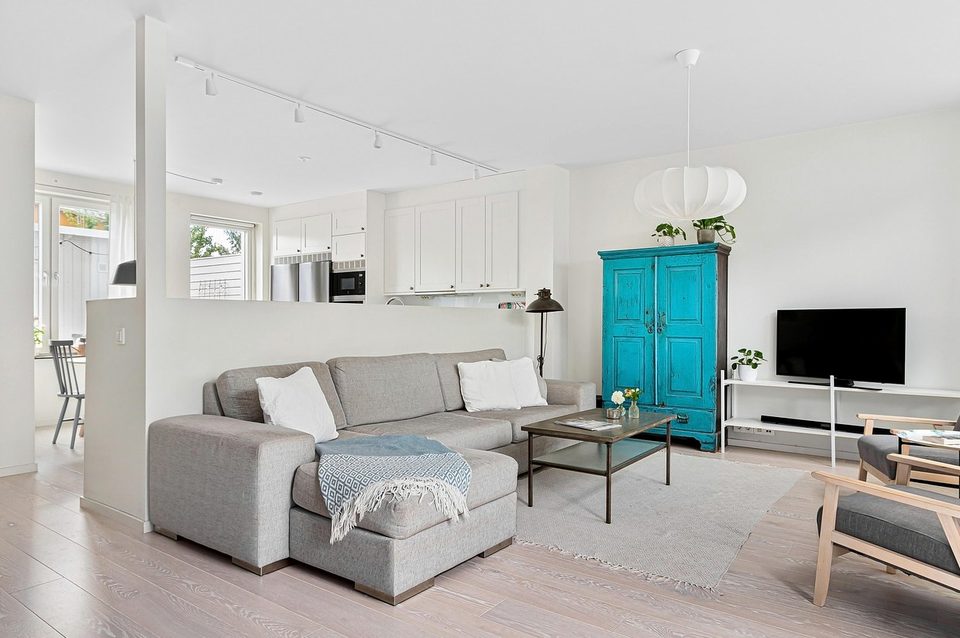
Scandinavian and minimalist interiors may look like different trends at first glance, but they share a clear approach to choosing furniture: a preference for light base tones, restrained lines, and the texture of materials. Here we divide these principles into six points and look at how each one works in a real space. We begin with the first three.
The Basic Color Palette of Scandinavian Interiors
Scandinavian interior colors are typically built on white, light gray, and soft beige or other mid-tones. These shades make a room feel more spacious and help spread natural light evenly. That is why it makes sense to settle the colors of the walls, floor, and large furniture first. For a large piece such as a sofa, choosing a color that does not contrast sharply with the backdrop is usually the safer option. Accent colors are generally placed in easily replaceable accessories like cushions or rugs. Limiting the number of colors keeps the overall impression calm and cohesive.
When choosing colors in a Scandinavian style, you also need to consider the direction of the light. In a living room that faces north or has small windows, warm ivory tones help keep the space from looking dark. Conversely, in a room that receives generous southern light, a strongly gray-toned color can appear overly bright. Even the same white looks entirely different under different color temperatures of lighting, so it is best to check colors under the actual lights in your home. Placing sample swatches between the wall and floor and comparing them in both daylight and evening light is a helpful method. This kind of checking reduces the regret that can follow a furniture purchase.
Minimalist interiors also follow the principle of limiting color. The goal, however, is not to use only neutral tones; the key is to keep the number of colors small. When the base colors of the furniture harmonize within two or three shades, the space naturally looks orderly. With wood in particular, it is wise to commit to one direction so that warm and cool undertones do not mix. Matching the finish of metal fittings to the same standard keeps the details from standing out too much. Ultimately, consistency of color is the most fundamental principle that connects the two styles.
Restrained Forms and the Character of Lines
Restrained form is the second characteristic that Scandinavian and minimalist furniture share. This means reducing unnecessary ornament and curves, and building the composition around horizontal and vertical lines. Such forms do not scatter the eye across the room, so the proportions of the whole space appear clearly. In the case of a sofa, aligning the thickness of the armrests with the height of the backrest in a simple way makes it easier to pair with other pieces. The simpler the form, the more the placement and dimensions of a piece matter, because furniture with few lines reveals even small differences in proportion.
The character of the lines also appears in the relationship between legs and body. Low legs that reveal the space beneath the furniture make the floor look more open and lighten the sense of weight. A body that sits close to the floor offers both ease of cleaning and a feeling of stability. This kind of structure is especially effective in a small living room. However, if the legs are set too low, sitting can become uncomfortable, so the way the piece will be used should be considered alongside its height. The key is to strike a balance so that the simplicity of the form does not come at the cost of function.
When choosing furniture with restrained forms, the sense of touch matters as well. Running your hand over the edges to see whether the finish is smooth, and checking whether the joints fit together precisely, will give you a good sense of the piece's craftsmanship. Simple lines expose even small differences in finishing, so attention to detail is necessary. It is also worth looking at how the sides and back of the furniture are finished, since a piece placed away from the wall will show its back as well. Restraint in form is only complete when it extends to the honesty of the parts that are not seen.
Criteria for Choosing Light-Toned Materials
When choosing light-toned materials, consider both texture and maintenance. Even light colors differ in how much light they reflect depending on whether they are wood, fabric, or leather, and the mood they create in a space changes accordingly. Wood with a natural grain in a natural tone gives a calm impression. The tighter the weave of a fabric, the less stains and dust it absorbs, which makes it easier to care for. Light materials show dirt more readily, so it is worth checking in advance whether they suit your daily routine.
Durability has the greatest effect on how well a light tone stays fresh over time. Light-colored fabrics and leather can fade when exposed to UV rays, so their placement near windows should be considered. A rough surface also collects dust and can make a color look dull, while an overly smooth surface tends to show stains. A sensible approach is to weigh texture against ease of care together. Knowing the properties of a material before you choose it helps reduce disappointment later.
Choosing light-toned materials is best judged in relation to the overall brightness of the room. If the walls and floor are already light, adding depth to furniture through texture works naturally. If the floor is a dark wood, light furniture materials create contrast that makes the space feel airy. When using several materials together, a practical guideline is to keep the tones within two or three related shades. Once each material's role is defined this way, a bright room stays calm without feeling monotonous.
- Check light-toned materials for the possibility of discoloration from UV exposure.
- For fabrics, review the weave density and the method of surface care.
- For wood, match the direction of the grain and the warmth of the color.
- Adjust the texture of furniture according to the brightness of the floor and walls.
Storage Methods That Reduce Clutter
Storage methods that reduce visual clutter are the principle most clearly shared by Scandinavian and minimalist interiors. Fewer visible objects in the living room let the lines of the space come through and make the form of the furniture easier to read. Storage is less about adding more furniture and more about hiding things inside it. Closed-door cabinets, flat-faced shelves, and handleless drawers, where the surfaces run evenly, suit this purpose. Assigning a place to each item turns tidying into a habit and keeps surfaces from looking cluttered.
When choosing storage furniture, look at the internal compartments as well as the capacity. Dividing placement so that frequently used items sit at hand height and occasionally used ones go on the upper or lower shelves reduces how often you open and close things. If drawers are too shallow, odds and ends easily spill into view, so check both depth and compartment layout. Storage units raised slightly off the floor are easier to clean and also make a space feel lighter. Storage pieces in the same color and material make a wall read as a single unified surface.
Reducing clutter should not mean having too little storage. The order of work is to estimate roughly how many everyday items you have during planning, then decide where each of them will actually go first. Choosing furniture after the storage needs are settled prevents excess belongings from spilling out. Ultimately, a well-organized space is not one with little furniture, but one where only what is needed is visible and the rest is naturally concealed.
Applying Principles to Korean Apartment Layouts
Many Korean apartments have an entrance and living room arranged in a straight line, and the length of the walls differs from home to home. When applying a Scandinavian style under these conditions, it is important first to check where the living room's line of sight begins. Placing low, tidy furniture on the surface visible the moment you step in from the entrance makes the space feel more spacious. Balcony areas created by enclosing verandas and corridor-style living rooms are best approached with the same method of dividing furniture heights.
The position of windows and heating is also an important guide for arranging furniture. Low furniture is often placed beneath windows so that sunlight is not blocked, while taller storage is set against the walls to fill out the surface. In homes with floor heating, it is also worth checking whether furniture with high legs obstructs the flow of warm air. Accurate dimensions should be confirmed by reviewing the floor plan together with the actual daily circulation paths.
In a Korean apartment living room, the relationship between the TV and the sofa largely determines how the space is lived in. Nordic-style interiors favor an arrangement where furniture gently embraces the center of the room rather than lining the walls. Applying this principle, placing the sofa slightly away from the wall often works well. The final layout is best decided based on the structure of the home and the family's daily movement.
Using Statement Pieces with Restraint
The basic approach is to place just one or two statement pieces at the heart of the space and keep everything else in neutral tones. When one piece stands out, the others recede into the background, keeping the whole calm. A statement piece should make its presence felt through form or texture rather than color, which is the more restrained approach. For example, a single chair with flowing curves or a rug with a striking texture can do the job well.
Several criteria make choosing a statement piece easier. Checking the points below will help you make a selection that feels restrained.
A statement piece should have a form simple enough that you never tire of it, even over time. Designs that strongly reflect trends can make the whole space look dated within a few years. So when choosing colors and forms, think first of combinations that will last longer than your current taste. Changing the mood with small accessories while keeping large furniture neutral is a stable approach over the long term.
In short, furniture selection in Nordic and minimalist interiors is closer to a process of subtraction. Clearing surfaces through storage, keeping circulation open through layout, and limiting statement pieces to a minimum are the shared principles. These principles apply well even to the narrow, elongated layouts of Korean apartments. Once you set standards that fit your own way of living, furniture stops being objects that fill a space and becomes a tool that supports daily life.
- Use bright tones in the same family as the surrounding furniture as the base
- Keep statement pieces to one or two per space
- Choose materials with simple forms and a lively texture
- Position pieces in line with the direction your eye naturally falls
- Avoid disrupting the heights and lines of other furniture
Key takeaways
-
Storage To reduce clutter, assign a place for each item and choose closed storage with doors.
-
Layout In Korean apartments, it is best to first check the starting point of your sightlines, the windows, and the heating positions, then divide furniture heights accordingly.
-
Statement Limit statement pieces to one or two and give them presence through form and texture; this is the restrained approach.
This article is intended to provide general information and does not replace official professional advice.